
EPE EPS Plastic Foam Pelletizing Line
EPE EPS Plastic Foam Pelletizing Line is an industrial recycling system designed to convert bulky waste expanded polystyrene (EPS) and expanded polyethylene (EPE) foam into clean, high-density recycled PS/PE pellets. Utilizing a heavy-duty foam crusher, dual-stage continuous extrusion, water cooling, and automated strand pelletizing, this line delivers a maximum output of 200 to 1,000 kg/hour while drastically reducing material transport costs for recycling plants.
EPE EPS Plastic Foam Pelletizing Line
Engineered for High Density, Pure Granulation & Easy Operation
Dual-Stage Filtration & Extrusion: Shuliy double-stage extruders and hydraulic non-stop screen changers to filter out impurities, ensuring smooth, air-bubble-free PS/PE pellets.
Energy-Efficient Heating System: Features cast-aluminum and ceramic heating elements with precise multi-zone PID temperature control, preventing material degradation or discoloration during melting.
Heavy-Duty Wear Resistance: Nitrided 38CrMoAlA alloy steel screws and barrels provide superior wear resistance against contaminated post-consumer foam waste.
Automated Strand Pelletizing: Precision rotary pelletizers deliver uniform pellet size (3–5mm), ready for direct use in injection molding or extrusion processing.
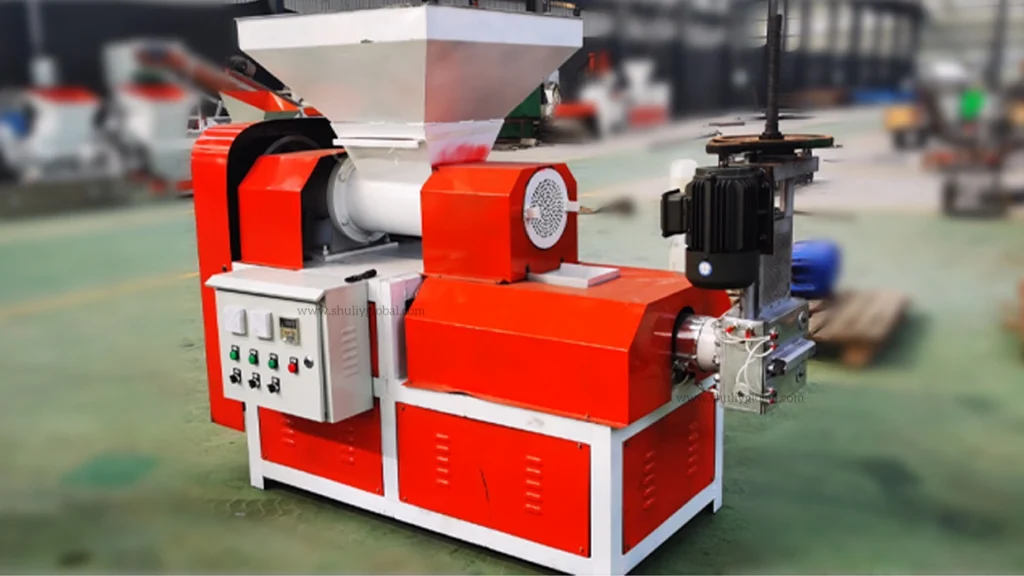
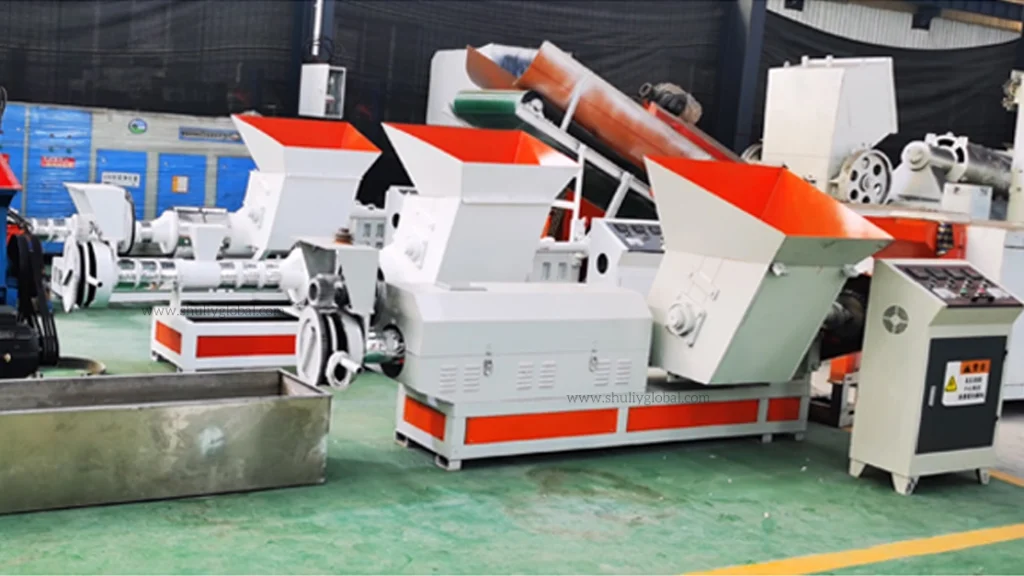
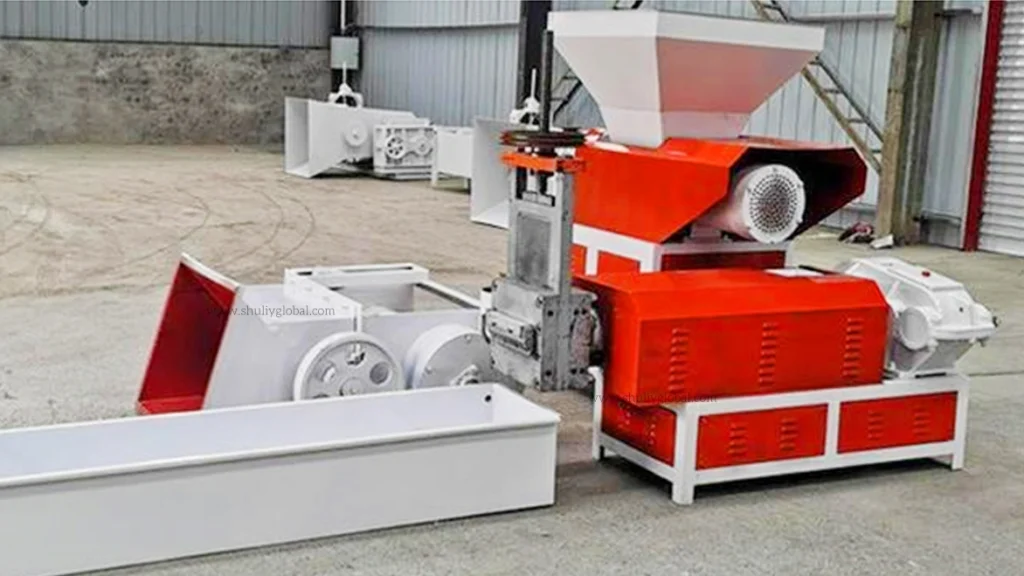
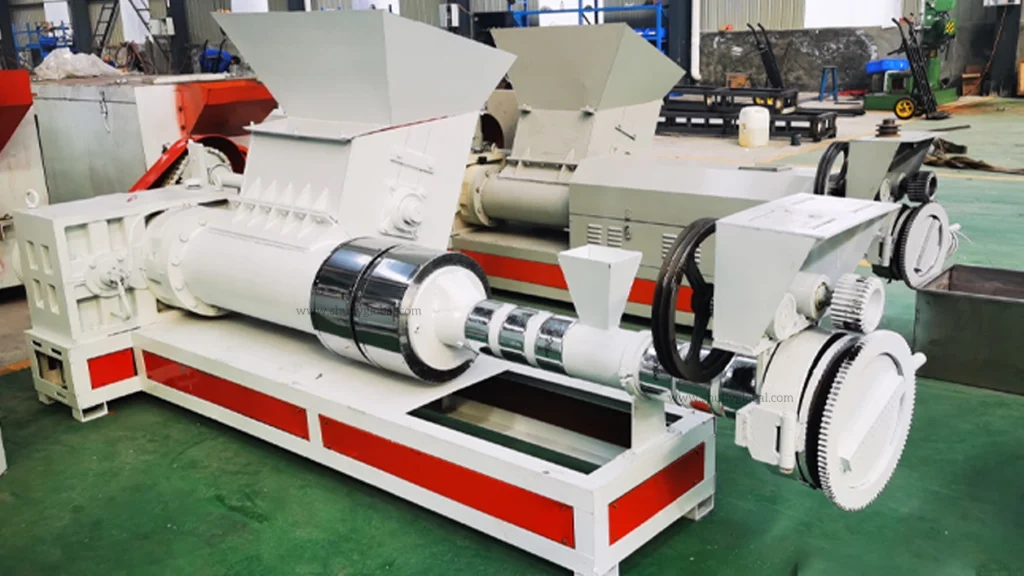
EPE EPS Plastic Foam Pelletizing Line Workflow
- Draught Fan: Blow up the plastic foam so that the plastic foam enters the inlet
- Plastic foam crushing machine:The machine can crush the foam into small piece
- Plastic pellet making machine :The raw material is heated and melted in this machine,and the melted plastic foam is drawn through the die in the machine
- Water tank: Is used to cool the plastic foam pellet and send the plastic pellet to next step-foam cutting machine.
- Plastic foam cutting machine:This machine is used to cut the plastic foam strip into small pieces and the size of pellet can be adjusted as your requirements.
- Plastic foam pellet packing machine:packing the final product(plastic foam pellet)
- Control cabinet:The temperature control cabinet control the temperature of the plastic foam pellet machine and also make people easy operate the machine.
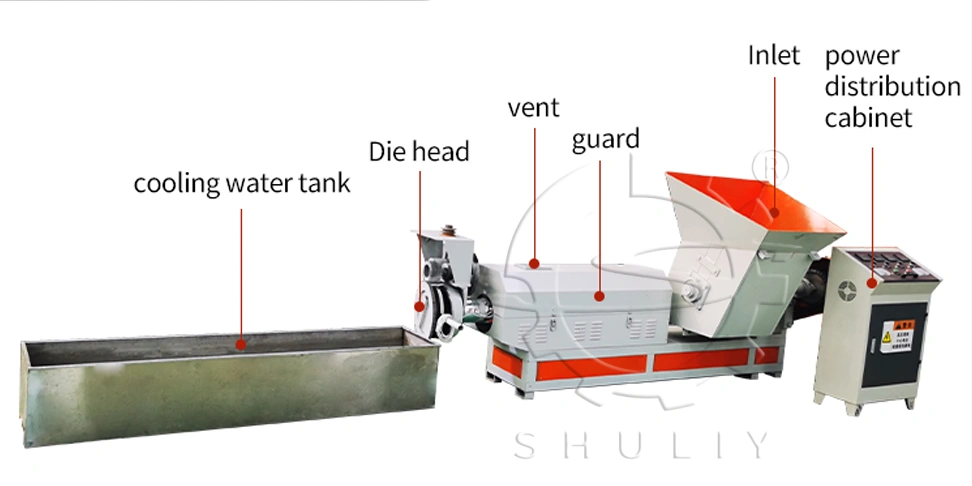
Standard EPE EPS Plastic Foam Pelletizing Line Models & Parameters
| Parameter | SL-160 | SL-220 | SL-270 | SL-320 | SL-350 |
| Application | EPE | EPS | EPS | EPS | EPS |
| Modelo | SL-160 | SL-220 | SL-270 | SL-320 | SL-350 |
| Capacity (kg/h) | 150–200 | 150–175 | 200–225 | 275–300 | 325–375 |
| Main Motor Power (kW) | 30 | 15 | 18.5 | 18.5 | 22 |
Input vs. Output: Maximizing Waste Value
Input Materials :Post-industrial EPS packaging blocks, EPE pearl cotton sheets, waste foam boxes, fish crates, and loose foam insulation scraps.
Output Finished Product : High-purity, uniform, high-density recycled PS / PE granules. Perfect for manufacturing picture frames, skirting boards, clothes hangers, and new protective packaging.
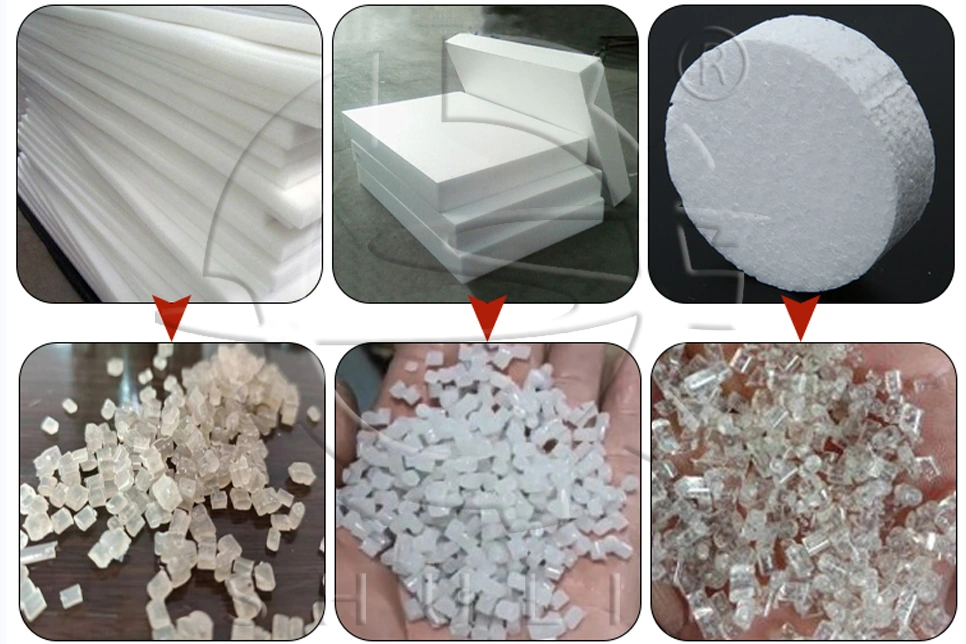
Frequently Asked Questions About EPE EPS Plastic Foam Pelletizing Line
Q1: Can a single EPE EPS plastic foam pelletizing line process both EPS (Styrofoam) and EPE (Pearl Cotton) foam?
A: Yes. While EPS (Expanded Polystyrene) and EPE (Expanded Polyethylene) have different thermal properties and densities, a dual-stage pelletizing line equipped with specialized screw geometry and multi-zone PID temperature controllers can process both materials.
- EPS Processing: Requires precise temperature control to melt the rigid foam and vent trapped air without scorching the PS polymer chain.
- EPE Processing: Requires a higher torque drive, specialized forced-feeder configuration, and tailored cooling parameters due to EPE’s high elasticity and lower melting point.
Q2: What is the volume reduction ratio during the pelletizing process?
A: The volume reduction ratio reaches up to 50:1 for EPE and up to 90:1 for loose EPS foam.
Bulky foam waste (which typically has a density of less than 20 kg/m³) is crushed, thermal-melted, and extruded into dense, solid PS/PE plastic pellets (with a density exceeding 900 kg/m³). This dramatic compression cuts storage space requirements and international shipping costs by up to 90%.
Q3: How does the EPE EPS plastic foam pelletizing system handle moisture and air bubbles in post-consumer foam waste?
A: Our machinery incorporates a dual-venting vacuum degassing system on the primary extruder:
- Natural Venting Zone: Releases initial steam and moisture trapped inside wet or dirty post-consumer foam during early heating.
- Vacuum Degassing Zone: Extracts residual air, moisture, and low-molecular volatile gases under negative pressure before the melt passes through the filter.
This dual-action degassing yields 100% solid, bubble-free, high-density granules suitable for high-end injection molding or profile extrusion.
Q4: How do you prevent material contamination and avoid frequent downtime for mesh changes?
A: The line features a Hydraulic Non-Stop Double-Piston Screen Changer positioned right after the main extruder barrel:
- Dual-filter channels allow continuous melt flow while one filter mesh is being replaced.
- Swapping dirty mesh filters takes under 2 seconds without stopping the main motor, interrupting the water trough cooling, or turning off the cutter.
- High-mesh stainless steel filter screens effectively trap paper labels, dust, sand, and non-melting polymers.
Q5: What are the output applications for the recycled PS and PE pellets?
A: The high-purity recycled granules command strong commercial resale value and serve as direct raw material for downstream manufacturing:
Recycled PE Pellets (from EPE): Re-extruded into new EPE protective packaging, agricultural film, plastic pipes, and modified compounding resins.
Recycled PS Pellets (from EPS): Used to produce PS decorative picture frames, architectural skirting boards, clothes hangers, electronic housings, and XPS insulation boards.